# Introduction
Has the opening up of data in local authorities resisted the contraction of financial resources, the health crisis or the security retreat motivated by the context of cyber-attacks, which are real but different from the open data dynamic?
We will see in the following synopsis that if the opening of data continues in quantity and quality, it is mainly due to specific activities linked to specific projects (for example, those carried out within the framework of the Recovery Plan).
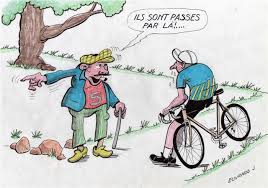
What is remarkable is that the large group of medium-sized communities ("the peleton") is taking over this progression, previously carried by the large communities ("the breakaway" to keep the image of cycling).
Note that, with a few exceptions, the smallest communities remain far behind the leading peleton and risk being relegated if technical assistance does not intervene!
---
# Agent Instructions: Querying This Documentation
If you need additional information that is not directly available in this page, you can query the documentation dynamically by asking a question.
Perform an HTTP GET request on the current page URL with the `ask` query parameter:
```
GET https://opendatafrance.gitbook.io/observatory-of-opendata-in-local-authorities-eng/edition-2022/introduction.md?ask=
```
The question should be specific, self-contained, and written in natural language.
The response will contain a direct answer to the question and relevant excerpts and sources from the documentation.
Use this mechanism when the answer is not explicitly present in the current page, you need clarification or additional context, or you want to retrieve related documentation sections.